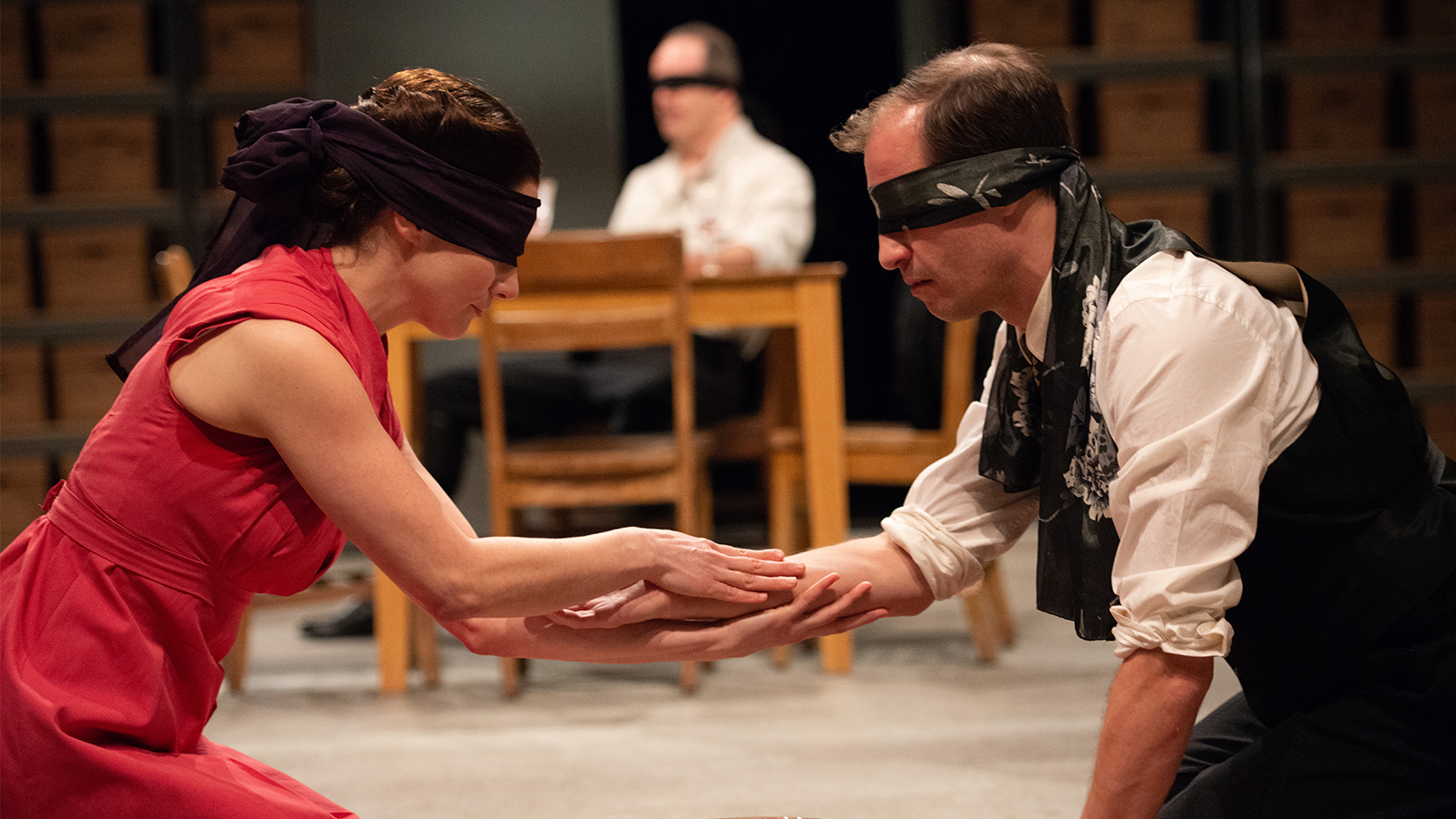
Describe the Night. Photo by Johanna Austin.
The Wilma Theater Blog
- Dramaturgy: The America Play
May 15, 2026
- Dramaturgy: Archduke
April 11, 2025
- Half-God BONUS Content
February 18, 2025
- Dramaturgy: The Half-God of Rainfall
February 4, 2025
- Dramaturgy: The Comeuppance
November 4, 2024
- Dramaturgy: Hilma
May 16, 2024
- Dramaturgy: The Good Person of Setzuan
March 28, 2024
- Ukraine Support Resources
January 29, 2024
- My Mama and the Full-Scale Invasion dramaturgy
January 26, 2024
- Fat Ham BBQ and Q&A
November 22, 2023
- Two Men Fishing
November 2, 2023
- 2022-23 Barrymore Nominees
Theatre Philadelphia · September 22, 2023
-
"A sculptor of space, a sculptor of energy"
May 24, 2022
- "A TRUE CONVERSATION BETWEEN PAST AND PRESENT" - A NOTE FROM CO-ARTISTIC DIRECTOR YURY URNOV
April 11, 2022
- LEARN MORE ABOUT 'THE CHERRY ORCHARD'
April 5, 2022
- “Which One is That?”: Similarities in Chekhov’s Plays
March 22, 2022
- MAKING CONVERSATION AND COMMUNITY
January 24, 2022
- The Multiple Selves in 'Minor Character'
November 5, 2021
- A Q&A With 'Minor Character' Director Yury Urnov
October 20, 2021
- An interview with 'Minor Character' Co-Creator Morgan Green
September 28, 2021
- Real and Ridiculous: Personal Reflections on Chekhov
September 28, 2021
- Many Selves and 'Minor Character'
September 21, 2021
- "A Celebration of Theater" - A Q&A with 'Minor Character' Performer Justin Jain
September 15, 2021
- From 'Mare of Easttown' to 'Minor Character'
September 14, 2021
- A Note from James Ijames about our 2021-22 Season
July 26, 2021
- "Rough Around the Edges" - An interview with "Hold Fast" creator Steven Rishard
June 16, 2021
- A Q&A with Sarah Gliko about "The Rot"
June 14, 2021
- AN UPDATE ON OUR SEASON
June 9, 2021
- A Q&A with "The Floor Wipers" creator Taysha Marie Canales
June 1, 2021
- Equity, Diversity, and Inclusion: Black and Global Majority Artists, Theatremakers, and Emotional Labor
March 17, 2021
- Inside "Fat Ham"
March 2, 2021
- Melanye's Family's Gumbo Recipe
February 19, 2021
- An interview with Ross Beschler about 'Expired'
February 11, 2021
- A Q&A with Krista Apple about "Clay"
February 8, 2021
- An interview about 'Code Black Planet' with Anthony Martinez-Briggs
February 4, 2021
- Being Stuck and Perpetuating Whiteness in 'Heroes of the Fourth Turning'
December 10, 2020
- Inside the Wilma Bubble
October 29, 2020
- Community Connections in the Virtual World
October 28, 2020
- Unexpected Hero
October 27, 2020
- Our response to We See You White American Theatre
September 30, 2020
- Meet our new Board leadership
September 29, 2020
- A Bold Step...
September 16, 2020
- See Lighting Foundation: Support for Immigrant Theater Artists
July 28, 2020
- A conversation with 'Is God Is' Director James Ijames and Stage Manager Patreshettarlini Adams
July 22, 2020
- An Interview with 'Is God Is' designers
July 22, 2020
- A conversation with 'Is God Is' performers Brett Ashley Robinson and Danielle Leneé
July 20, 2020
- A Conversation with 'Is God Is' playwright Aleshea Harris
July 15, 2020
- More on the Globe
July 7, 2020
- Sharing thoughts about the 2020-21 Season
July 1, 2020
- Making 'Code Blue'
June 26, 2020
- A Message of Solidarity: Black Lives Matter
May 30, 2020
- How the Wilma Created its Virtual Fundraiser
May 27, 2020
- A video message and poetry reading from Co-Artistic Director Blanka Zizka
March 18, 2020
- Describing 'Describe the Night"
January 31, 2020
- An interview with DESCRIBE THE NIGHT playwright Rajiv Joseph
December 10, 2019
- Catching the Tail of Mr. Burns: an Interview with Director Yury Urnov
October 17, 2018
- Interview with 'Kill Move Paradise' playwright, James Ijames
August 29, 2018

